
Inawashiro Area
-

Lake Inawashiro
Lake Inawashiro is Japan’s fourth-largest lake. Through the Asaka Canal, built in the Meiji era, its waters continue to irrigate the farmlands of Koriyama. Its mirror-like surface has earned it the poetic nickname “Sky Mirror Lake.” The lake is also an important wintering ground for migratory birds such as the tundra swan. In July 2025, Lake Inawashiro was newly registered under the Ramsar Convention, recognizing it as a wetland of international importance, especially as habitat for waterfowl.
-

Ramsar Site
Lake Inawashiro is located at the foot of Mount Bandai and is surrounded by rice fields and coastal forests. The Lake, formed by a volcanic eruption 50,000 years ago, is the fourth largest in Japan. As the Lake does not completely freeze over during the winter, it is a vital overwintering habitat for swans and ducks. Notably, over the five years to 2025, an average of over 800 tundra swans (Cygnus columbianus bewickii) were recorded at the Site. Sand and mud in the northern part of the Lake create suitable conditions for the only known breeding ground in Fukushima prefecture of the fringed water-lily (Nymphoides peltata). While the Lake’s water was acidic in the 1930s, it has become neutral since then, though the exact cause of this change remains unclear. The Site is a popular destination for recreational activities such as swimming, birdwatching and camping.
-

Sightseeing boat
The turtle- and swan-shaped boats are a favorite among both adults and children. Also available are wake-boarding lessons, license acquisition lessons for water scooters and 2nd-grade (boat) licenses, as well as motorboat sightseeing cruises.
-

Tenkyokaku
Named by the Crown Prince Yoshihito upon its opening in 1907 as “The Palace of Heaven’s Mirror”, Tenkyokaku is a decadently decorated former villa.
-
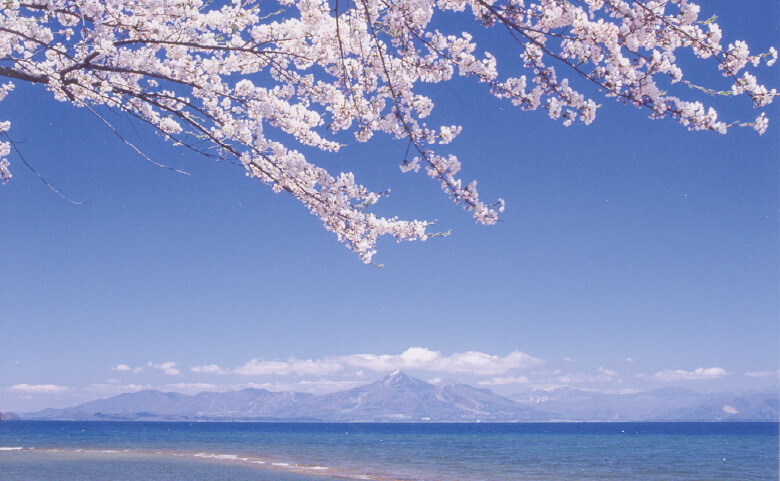
Seven Konan Beaches
In the Konan district of Koriyama, which faces Lake Inawashiro, there are seven beaches where visitors can enjoy lake swimming while taking in a sweeping view of Mt.Bandai
-

Natural Ice Sculptures
During the coldest part of winter, nature creates unique art masterpieces through the phenomenon called “shibuki-goori” (splash-ice). Due to strong western winds, the lake’s water becomes spray, lands on the trees and shrubs on its shores and forms shapes not to be seen anywhere else in Japan. Another beautiful sight is that of the swans in the Shidahama and Nagahama areas.